The Weird and Wonderful Vegetable Every Allotmenteer Should Grow
Every year on Lottie I try to grow something that gets visitors scratching their heads and asking, “What’s that then?”
This year, one of the stars of the plot has been kohlrabi.
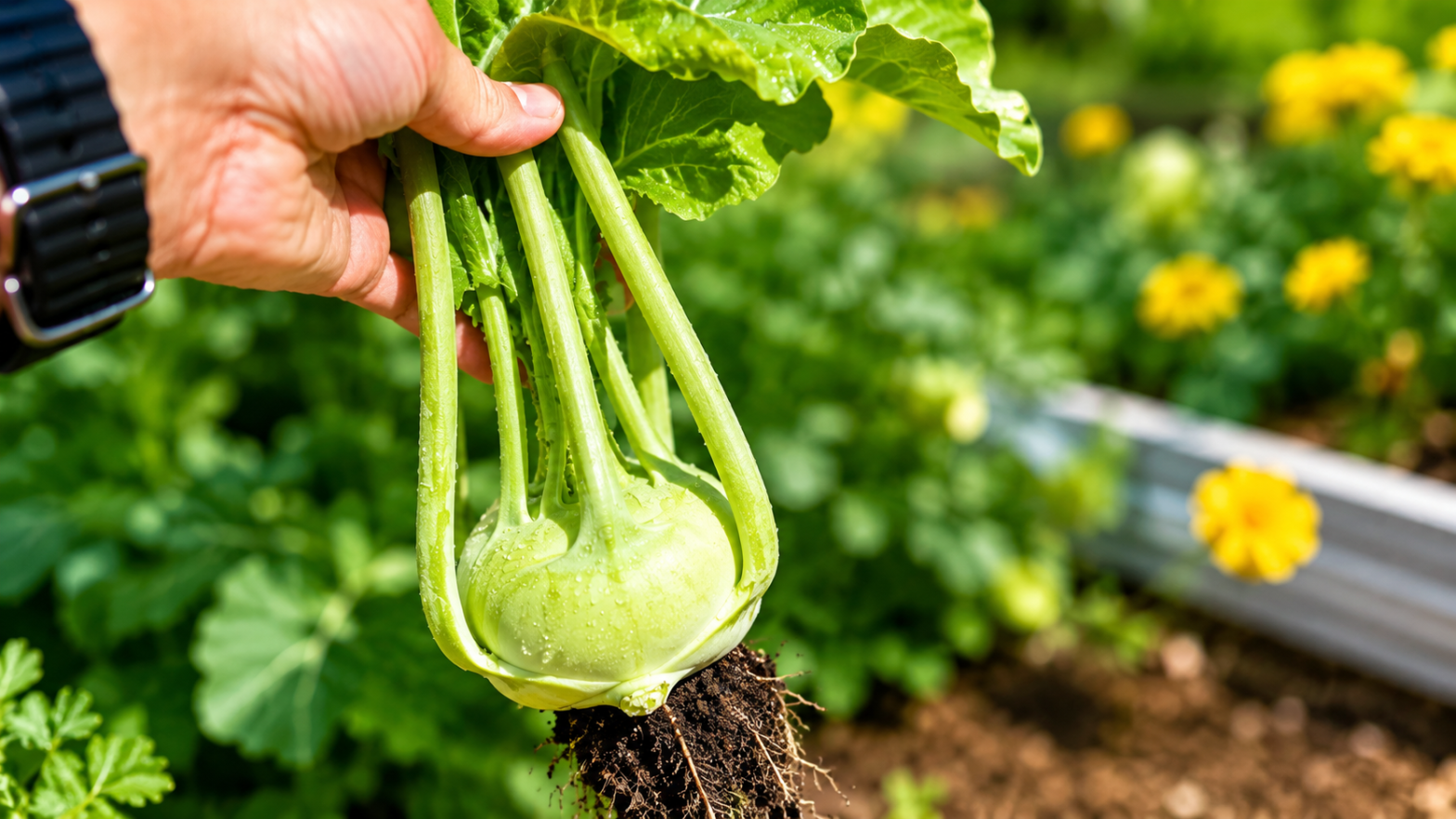
At first glance it looks like a turnip that’s escaped from the ground too early. Some people think it’s a root vegetable, others think it’s a strange cabbage. The truth is even more interesting.
Unlike cabbages, cauliflower and broccoli, the part we eat isn’t a root at all. That round bulb sitting above the soil is actually a swollen stem. Nature has essentially inflated the plant’s stem like a balloon, creating one of the most unusual vegetables you’ll find on the allotment.
Once you’ve grown it, you’ll wonder why it isn’t more popular.
Sowing Kohlrabi
Kohlrabi is one of the easiest brassicas I’ve grown on Lottie.
You can sow from March right through to July for a succession of crops. I prefer sowing into modules because it saves space and gives me sturdy little plants ready to slot into gaps around the plot.
Sow seeds around 1cm deep and keep them moist. Germination is usually quick, often within a week.
If you’re short on space, kohlrabi is brilliant because it takes up far less room than a cabbage or cauliflower.
Planting Out
Once the seedlings are large enough to handle, plant them about 20-25cm apart in a sunny position.
As a no-dig allotmenteer, I simply plant straight into compost-rich beds and let the soil biology do its thing. The plants seem to love it.
Traditional growers should make sure the soil is fertile and well prepared before planting.
The key to success is steady growth. Keep plants watered during dry spells and they’ll reward you with tender, sweet stems.
The Secret Most People Don’t Know
Many first-time growers think they’ve failed because the bulb appears above the soil.
In reality, that’s exactly what should happen.
The swollen stem develops above ground and gradually expands until it resembles a green tennis ball balanced on a stalk.
It’s one of the most fascinating vegetables to watch develop, especially if you’re showing children around the plot.
When To Harvest
Harvest when the stem reaches around tennis-ball size.
This is where many allotmenteers make their only mistake.
Leave kohlrabi too long and it can become woody. Smaller is usually sweeter and more tender.
Simply cut the stem just below the bulb and remove the leaves.
Don’t throw those leaves away either. They’re perfectly edible and can be cooked just like spring greens.
What Does Kohlrabi Taste Like?
If you’ve never tried it before, imagine the sweetness of an apple combined with the freshness of a broccoli stem and the mild flavour of a young cabbage.
It’s crisp, juicy and surprisingly sweet.
Freshly picked from the allotment, it’s one of those crops that rarely makes it all the way back to the kitchen before somebody has taken a bite.
How To Use Kohlrabi
Raw
My favourite method.
Peel away the outer skin and slice into sticks. It’s fantastic for dipping into hummus or adding crunch to salads and coleslaws.
Roasted
Cube it, toss with a little olive oil and roast at 190°C fan until golden.
The natural sugars caramelise beautifully.
Mashed
Boil until tender and mash with butter and black pepper for a delicious alternative to mashed potatoes.
Stir Fries
Slice thinly and add to stir fries where it keeps its lovely crunch.
Soup
Kohlrabi works brilliantly in soups alongside onions, potatoes and herbs from the plot.
Still Time To Sow
As I’m writing this in late June, there’s still plenty of time to grow a crop of kohlrabi this year.
Many allotmenteers assume they’ve missed the sowing window, but kohlrabi is a fast-growing vegetable and can still be sown now for harvesting later in the summer and into autumn.
In fact, summer sowings often grow quickly thanks to the warmer soil temperatures, producing lovely tender stems ready for the kitchen in just a few weeks.
So if you’ve got a spare corner on the plot or a few empty modules sitting in the greenhouse, why not give kohlrabi a go? You might discover a new favourite vegetable before the season is out.
Why I Think It Deserves A Place On Every Plot
We all grow the usual favourites. Potatoes, onions, beans and tomatoes rightly earn their place.
But every allotment deserves a few conversation starters.
Kohlrabi is productive, easy to grow, doesn’t take up much room and gives you something genuinely different to eat.
More importantly, it’s one of those vegetables that reminds us why we started growing our own food in the first place. It’s fun, unusual and far fresher than anything you’ll find on a supermarket shelf.
So if you’ve never grown kohlrabi before, give it a go.
You might find yourself standing on the plot, admiring a row of little green spaceships, wondering why you waited so long to try it.
Fun Kohlrabi Fact
That strange round “bulb” isn’t a root. It’s a swollen stem. So while most vegetables hide their edible parts underground, kohlrabi proudly puts its best bit on display for everyone to see!

